 Beyond the Crisis: Mission Amid Persecution 🌍

And Jesus came and said to them, “All authority in heaven and on earth has been given to me. Go therefore and make disciples of all nations, baptizing them in the name of the Father and of the Son and of the Holy Spirit, teaching them to observe all that I have commanded you; and lo, I am with you always, to the close of the age.”
- Matthew 28:18-20

What's new this week
Pastors are central to what God is able to do with His Church. As shepherds over your flocks, you can encourage or prevent God's people from their highest calling. Your vision for the lost will inspire them, and your support will send some of them out into the harvest fields.
Visit our Pastor Resources page to find resources to encourage you, answers questions you may have about mobilising for missions, links to two organizations that can assist you in your church's journey, as well as videos and resources of note.
new for you
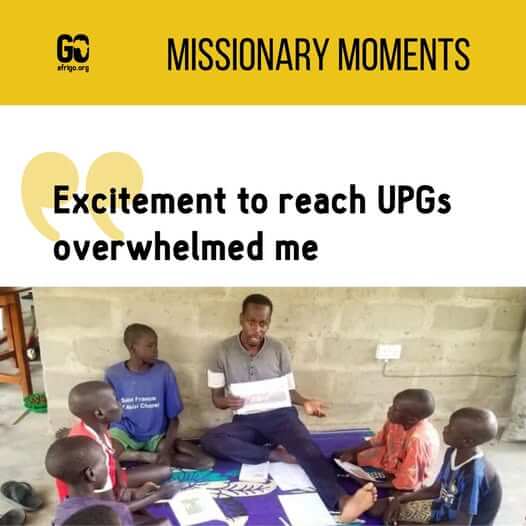
Missionary profile – Noblesse Ruhumuriza Nkunzi
I am a missionary in South Sudan reaching the people group called Laarim or Boya people living in the Boya Hills of South Sudan.
I was born into a Christian family, the youngest of eight siblings. My dad was a pastor, but he died before I came to know the Lord. We’re Rwandwan but relocated to DRC.
I was confident I would have a good grade on my High School Leaving Examination in the Congo (DRC). But during the exams, I could tell I wasn’t doing well. I was going to flop spectacularly. I started praying, but there was something amiss – I was bringing my request to the King of the kingdom of light while I still belonged to the realm of darkness. I knew I needed to choose which King I wanted to serve. I decided to surrender my life to Christ at that evening time.
Missionary Profile - Yinkamala
I am *Yinkamala (not her real name), a missionary with Calvary Ministries (CAPRO), a missions agency out of Nigeria. I worked extensively among unreached people groups in Nigeria, and through my ongoing commitment to do God’s will, he called me to serve on a Muslim-dominated island off the coast of Africa. The call became especially compelling to me after I realised that the people there are like fallow ground, with their hearts hardened against the gospel.
I arrived not knowing how God would use me, and was divinely led to volunteer at a government hospital as a nurse/midwife. This area has a high rate of maternal and child mortality, and I have been further led to start early pregnancy health education through community health education.
Being in an Islamic community, where unique culture and customs make sharing the gospel quite challenging, I find that my compassionate services pique people’s interest in Christ’s love. I am able to pray with women on the ward, and have had key moments where I clearly know that “this is why I serve.”
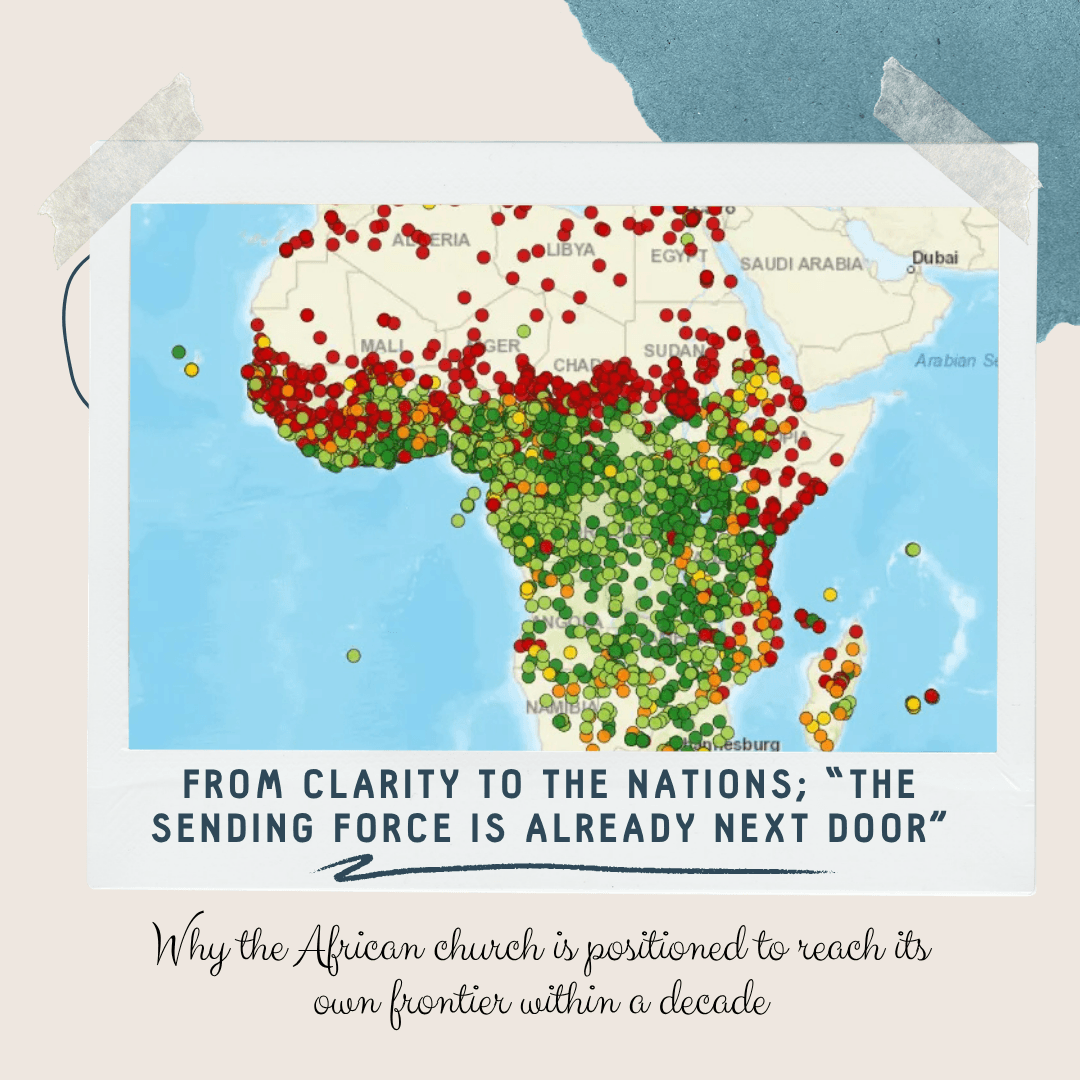
From Clarity to the Nations - The Sending Force Is Already Next Door
If you want to understand the future of missions in Africa, start with 2 numbers. The first number is 5,413. That is Joshua Project’s estimate of the cross-cultural workers needed to reach every frontier people group on the continent. The second number is 123 million. That is the estimate of evangelical believers already living in just four countries: Nigeria, the Democratic Republic of Congo, Kenya, and Ghana.
Set those side by side, and it comes to roughly one worker for every 23,000 African evangelicals. The African church does not lack people. It lacks awareness, mobilization, and equipping at scale. That is a solvable problem, and the timeline is years, not generations.
Our team just ran a fresh analysis of Africa’s Frontier People Groups on late-July 2026 Joshua Project data. Frontier peoples are the hardest edge of the unreached: 0.1% or fewer Christian adherents and no known movement to Jesus.
It forms one contiguous belt. The frontier runs
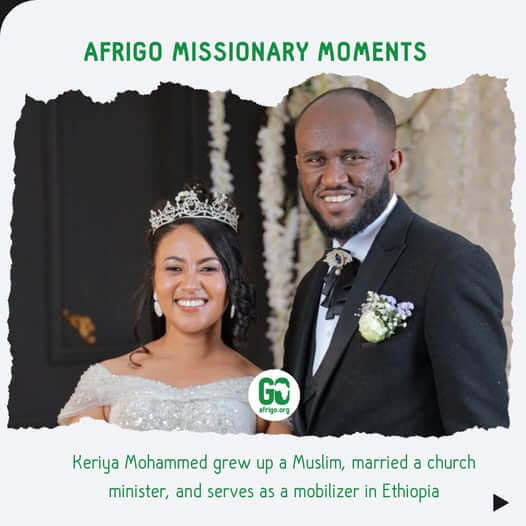
Missionary Profile - Keriya Mohammed
I grew up in northern Ethiopia in a Muslim family as the third of four children. As a child, I regularly attended the mosque to learn how to read the Quran. When I was eight years old, I joined a child development programme run by Compassion International. It was there that I first began hearing Bible stories and learning about Jesus.
Those stories stayed with me. I became curious and started reading the Bible privately. When I was 12 years old, while walking to a tutorial class one day, I experienced a deep inner conviction that Jesus was calling me to follow him. It wasn’t anything dramatic, just a deep inner conviction. That moment marked the beginning of my personal journey of faith.
As I grew in my faith, the church community played an important role in my life. I began serving as a Sunday school teacher, sharing Bible stories with younger children.
Later, I pursued theological studies and had the opportunity to study Christian–Muslim relations
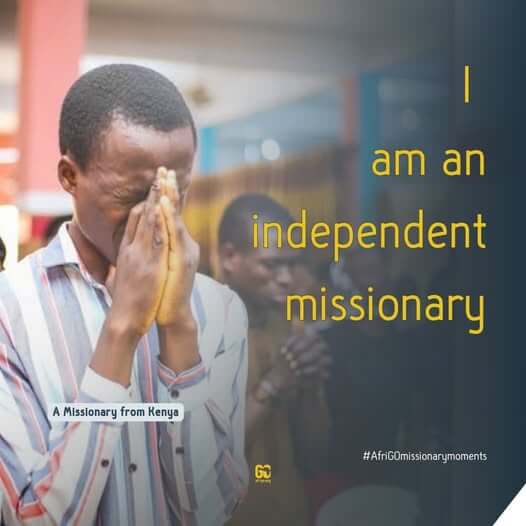
Missionary profile – SW
I was 13 years old when I accompanied my pastor and the church elders to visit a missionary in the mission field. I witnessed a hunger for the Lord unlike anything I had seen before; their need for God was raw and pure; I hadn’t seen that in my backyard. As we prayed for people and talked to them about Jesus, my call to be a missionary became crystal clear. I’m now a missionary in a Muslim community.
I was brought up by my grandmother after my Mom died in 2000. She took me to school and to the church where I met Jesus. I had such a deep desire to be a pastor, that my answer to, “what do you want to be when you grow up?’ was always, “a pastor!”
After my secondary education, I studied guidance and counseling. Later, I enrolled in a course in animal health. I felt God wanted me to reach out to a pastoralist people group,
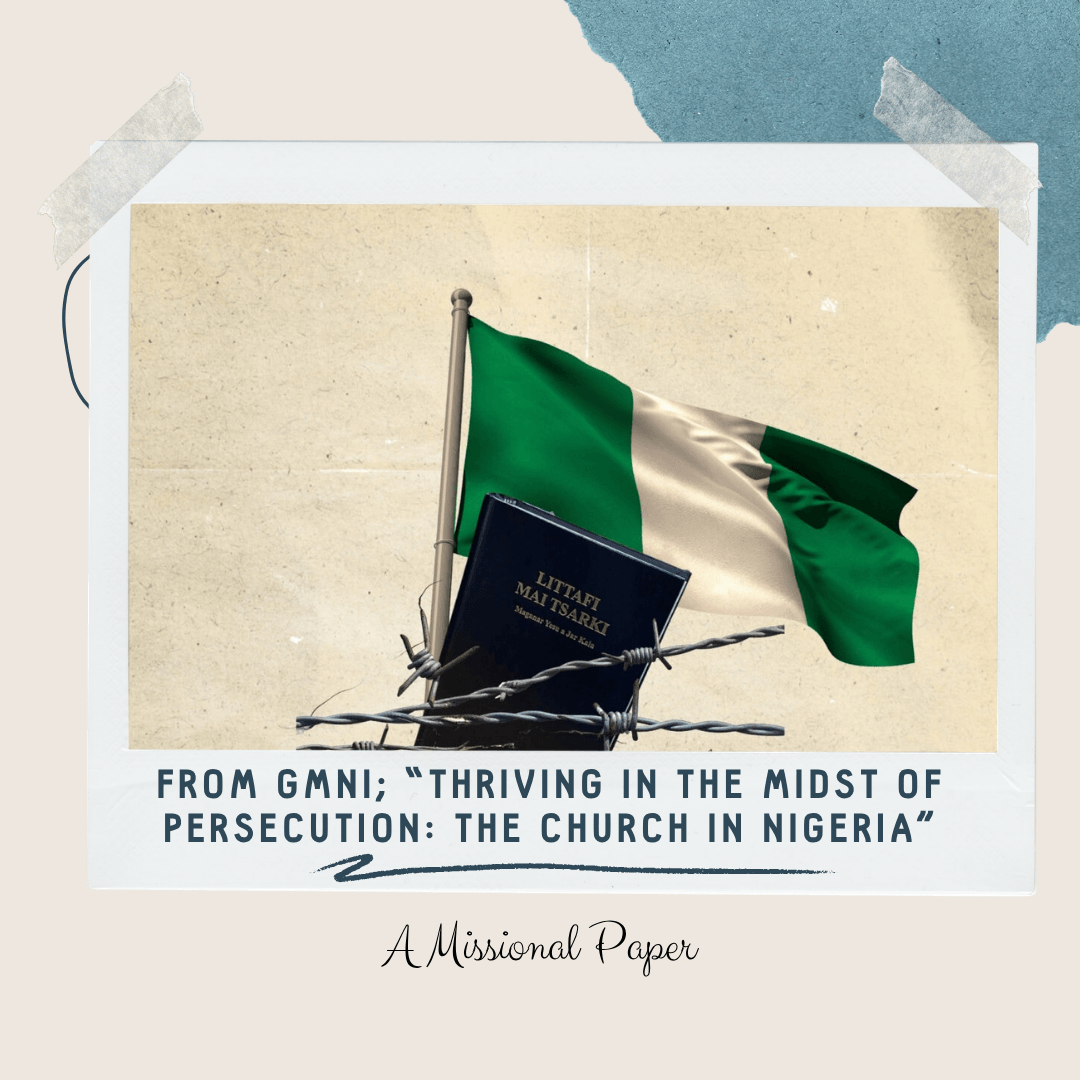
From GMNI - Thriving in the Midst of Persecution: The Church in Nigeria
The Nigerian Church continues to face sustained attacks from extremist Islamists in certain regions of the country.
In the Middle Belt and the far North of the country, Christians have been killed and continue to experience structural and systemic forms of persecution. Though attacks on Christians are mostly in the North and the Middle-Belt, the attack on St. Francis Xavier Catholic Church, Owo, in Ondo State in 20223 indicates that Christians in other parts of the nation are not entirely free from such targeted attacks. The freedom enjoyed by Christians in the Southern part of Nigeria sometimes makes the plight of those who face persecution in the far North and Middle often to be overlooked.
This paradoxical reality of prosperity of the Nigerian Church in the South and the persecution faced by Christians in other parts creates a contradictory reality. Yet this paradox reflects the lived reality of the Nigerian Church. So, we have a situation in which we have a
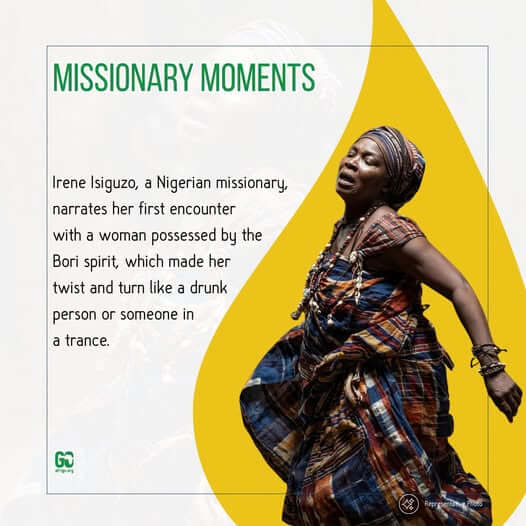
Missionary Profile - Irene Isiguzo
I worked among the Hausa in Northern Nigeria, and one of the things that I witnessed as a young missionary was the manifestation of a bori spirit. It transpired as we were living among the Maguzawas, a particular Hausa group who are not called that anymore.
We were living in our thatched hut made of mud with a grass roof, among the other huts and very close to others in the community. One day suddenly we saw one of the ladies begin to spin. In that place, the bori spirit was one which would come upon women, especially barren women, who have been known to be married for many years with no children. The spirit is usually invoked by a particular kind of instrument, a harp. When the harpist begins to play, then the spirit is invoked and it comes upon the barren woman.
I can still see the scene in my mind, even though it was more than 30 years ago. She suddenly began to twist and turn like a drunk person or

From GMNI: "the temptation to pursue the spectacular"
Are there certain temptations in ministry in general, and in mobilization ministry in particular, that leaders need to recognize and guard against? The answer, as we all know, is a resounding, YES!
Professor of leadership at Fuller Theological Seminary, Dr. Bobby Clinton, who also happened to be one of my mentors, suggested that relatively few ministry leaders finish well. Through his extensive research, he identified six common barriers that often derail leaders:
- Finances—their use and abuse
- Abuse of power
- Pride
- Illicit sexual relationships
- Family issues
- Spiritual plateauing
Every ministry leader should take deliberate precautions against these dangers. Yet there is another temptation that is often overlooked and sometimes even excused. Though far more subtle, it can be equally damaging to our
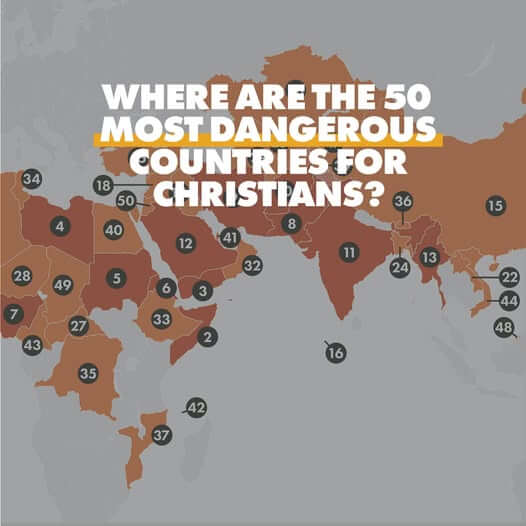
From Open Doors - 2026 most persecuted christians
The World Watch List is Open Doors' annual ranking of the 50 countries where Christians face the most extreme persecution. Explore each country profile and download the data and stories for in-depth information about following Jesus in the most dangerous places. You'll learn more about Christian persecution and discover how to stand with your brothers and sisters in prayer and action.
More than 388m Christians suffer high levels of persecution and discrimination for their faith.
In Open Doors' World Watch List top 50 alone, 315m+ Christians face very high or extreme persecution. Explore the country profiles to find information, stories and prayers for each of the countries, along with ways that you can stand with your persecuted church family in prayer and action.
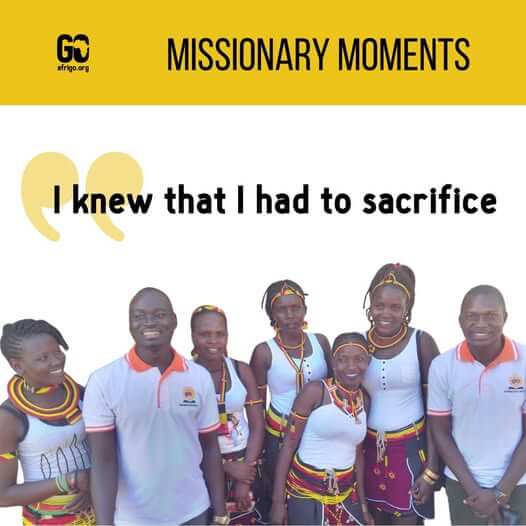
Missionary Profile - Amos and Janet Epau
The Ik people were abandoned many years ago in terms of education, health care and outreach. In 2022, I signed up for only one year to serve in their community, but when I got there, I saw so many needs that broke my heart into pieces.
I knew that I had to sacrifice to serve the Ik, and became involved at the school in ministry to the children. I also encouraged the children to attend school regularly. We started Bible study groups and discipleship classes. I became so bonded with the community that when I took two months away, the ministries began to collapse and children stopped attending class. People were searching for me, until I returned.
Until this time, I am deeply involved in serving the Ik and even though the ministry is so challenging, I keep on trusting God because he is my everything. I have such a passion for the Ik people, and what motivates my heart is listening to the call of God and what his word speaks into my life.
I recently married, and we have agreed in our
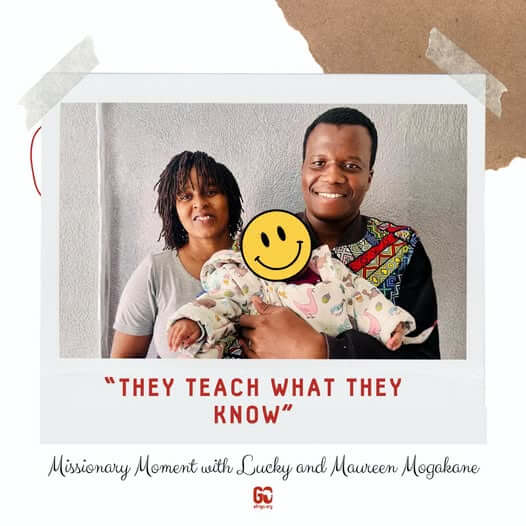
Missionary Profile - Lucky and Maureen Mogakane(opens in new tab)
Back in 2017 while I was pursuing my first theological degree, I learned that Malagasy pastors needed theological training. These pastors were not just serving in their communities, but were planting churches among the unreached of Madagascar. This seemed like the best and most strategic place to use the knowledge and skills I was acquiring to equip those pastors, who could not afford formal theological training.
When my wife and I left for the mission field in 2024, we knew we would be equipping and strengthening four of these church plants by offering informal theological training. A new church plant was started in a nearby village within one month of our arrival.
When we asked how it would be pastored, we were told the plan was that the pastor at another church plant at Ambatozavavy would travel every Sunday to the new church plant, and then return for the service in his church, until a young man could be trained to take over.
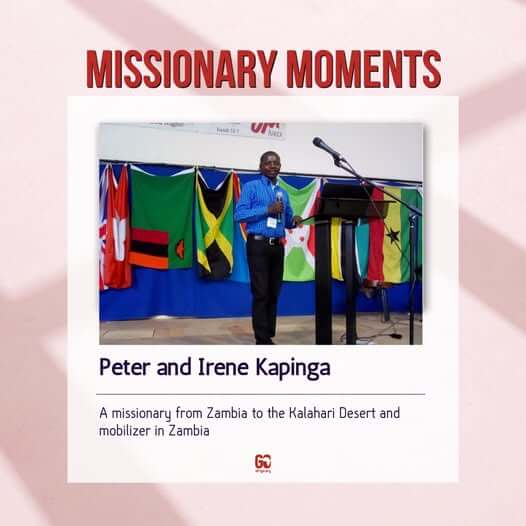
Missionary profile – Peter and Irene Kapinga
My first demonstration of Christian service was my dad – he was and still is an evangelist. I didn’t want to be a preacher like him; I wanted to be an army officer. Dad said that wasn’t my career. I disagreed with him, but time has vindicated him. God’s plan for me was to be a missionary and mobilizer.
My wife, Irene and I now work with Africa Inland Mission (AIM), mobilizing and training the Church in Zambia. We have a supporting team.
Before becoming a missionary, I was a casual labourer at Copper Belt. I worked in the mines for a year before realizing that mining copper wasn’t my calling either. I enrolled to do social work at the university. My dream was to become a lecturer in a Bible school, so I applied to do theology.
When we studied Church history, the stories of the early fathers of faith and their passion and dedication inspired me a lot. I wanted to change the world as they did.