Beyond the Crisis: Mission Amid Persecution 🌍

The mission force in front of us
Biruktawit Tsegaye Mandefro
Listen to this article
On December 29, 2017, 18 university students passionate about witnessing gathered after the Commission Conference organized by the Fellowship of Christian Unions (FOCUS), Kenya. They formed the Northern Beacons of Light (NOBOL) on November 25, 2018, aiming to spread the gospel to least-reached communities in northern Kenya and beyond. Many of those 18 are now engaged in Bible school, translation, and mission work.
A young lady who participated in FOCUS Kenya’s short-term global programme initiated Muslim evangelism at her Jaramogi Oginga Odinga University of Science and Technology in western Kenya. Later, she pursued a Master of Arts degree in Missions, specializing in Islamic Studies. She is now the mission mobilization coordinator for a major Pentecostal church in Kenya.
In 2009, the Christian Union at the Jomo Kenyatta University of Agriculture and Technology conducted a mission in Kasiluni, Kitui and identified a school lacking basic structures. Since then, they have supported the school through classroom construction, sending missionaries as teachers, providing learning materials, and implementing food and mentorship programmes. By 2022, the school had grown to accommodate 600 pupils.
FOCUS Kenya
Young people are not only a mission field; they are also a formidable mission force, and the most strategic place to reach them is within institutions of higher learning. If we want to change the world, we must begin where leaders are formed, ideas are tested, and convictions are shaped. Institutions of higher learning serve as a launch pad for youth in missions and FOCUS Kenya is strategically engaging young students for that purpose.
FOCUS Kenya was founded in 1973 as an umbrella body linking and networking Christian Unions (CUs) in institutions of higher learning across Kenya. It is an interdenominational, non-profit movement affiliated with the International Fellowship of Evangelical Students (IFES), operating within the English, Portuguese, and Spanish-speaking Africa (EPSA) regions. It collaborates with over 240 CUs, reaching more than 65,000 students in public and private universities and colleges. Its mission is to see Christian students and associates impact higher education institutions, the Church, and society through effective Christian living. Missions is one of its six strategic priorities. The rest are discipleship and Scripture engagement, leadership development, campus and college evangelism, societal transformation, and mentorship and care.
Clement Babu, the former missions director for FOCUS Kenya, shares: “We define missions as the holistic preaching of the gospel beyond campus communities, mobilizing and equipping students to engage through going, praying, and giving. We encourage each campus to adopt five primary, junior secondary, and senior secondary schools within a 5km radius to share the gospel and we mobilize students for missions lasting three to 14 days. In recent years, over 90 CUs with 4,506 students have participated in our mission trips. Our goal is for CUs to adopt specific people groups in Kenya for prayer and engagement.”
 Training and collaboration
FOCUS Kenya is committed to empowering Christian students to transform their campuses and communities through holistic mission work. By equipping students with the necessary skills and opportunities, the ministry aims to cultivate a generation of leaders who will boldly share the gospel and enact social change.
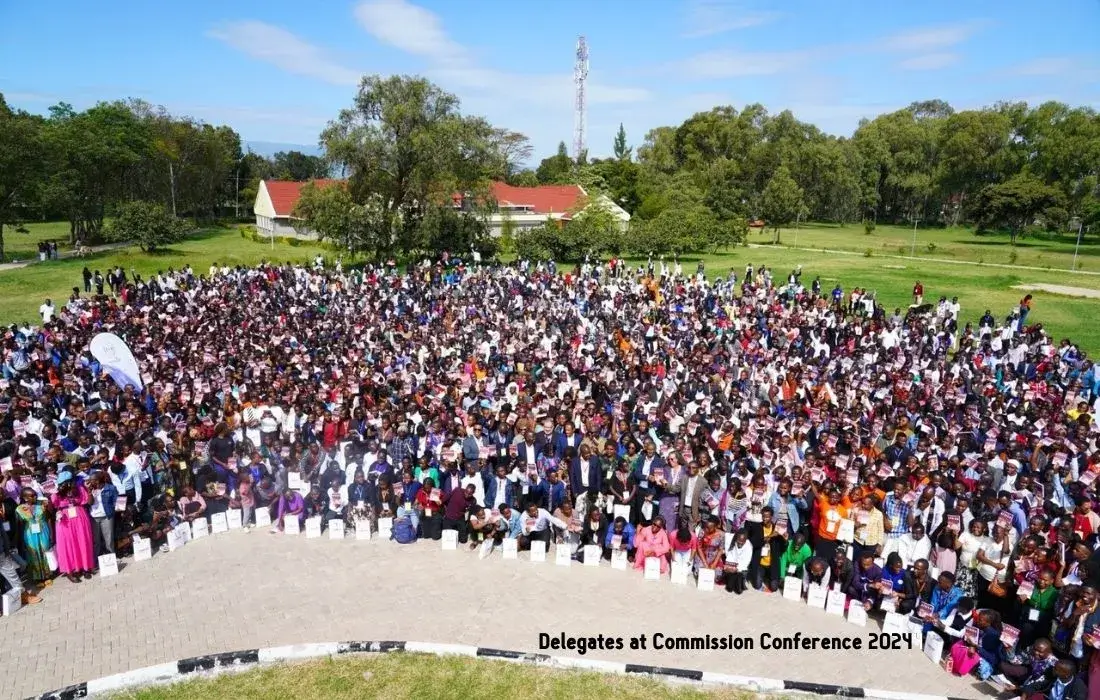
Every three years, FOCUS Kenya organizes the Commission Conference which focuses on equipping students for missions. Over 2,700 delegates attended in 2024, leading to significant commitments to mission organizations such as the Sheepfold Ministry in Garissa. It was at a Commission Conference that the NOBOL initiative started to reach communities in Northern Kenya such as the Samburu, Borana, Gabra, and Somali people groups. Since its inception in 2017, 521 students have participated in the initiative, with about 85 per cent being Muslim converts, emphasizing the need for discipleship and evangelism.
During the long holidays, FOCUS Kenya mobilizes students for a four- to six-week mission engagement that includes onboarding, cross-cultural training, exposure, and debriefing. This has resulted in over 5,100 people hearing the gospel with 199 conversions to Christ.
Another initiative is the Short-Term Experience in Ministry (STEM) launched in 1992 as a follow-up to that year’s Commission Conference. It gives fresh graduates the opportunity to serve God in universities and colleges, church, and society for one year. Currently, it has five participants. Two are training local evangelists in collaboration with World Concern and have planted two churches. Two are an agricultural officer and a teacher serving as missionaries among the Samburu people. The last participant is involved in community development in the Dadaab refugee camp.
FOCUS Kenya also facilitates exchange programmes with sister movements, including a six-week summer programme where Intervarsity students learn cross-cultural ministry skills alongside Kenyan students. Another collaboration happens with the Norwegian branch of IFES with participants involved in a 10-month cross-cultural mission before they engage with various movements.
In partnership with Christ is the Answer Ministries (CITAM), FOCUS launched the Least-Reached Integral Gospel-centred Homegrown Transformative Programme (LIGHT-P) with the vision to raise passionate local and global missionaries through training, mentorship, and exposure. A student from the first cohort influenced his CU to adopt the Gabra people group in Northern Kenya and last year, they conducted a successful mission there with plans to return this year.
Mentorship
To effectively support young people in missions, Clement Babu counsels, “Develop their capacity in various aspects of missions including digital missions, frontier missions, urban outreach, and missions to people of other faiths. Establish long-term discipleship pathways to guide them from initial exposure to deeper commitment. Create structured programmes for mission exposure and provide mentorship throughout the process. Ensure strong biblical and theological grounding in God’s mission, offering guidance before, during, and after their engagement in missions.”
“Many young people face financial challenges when participating in mission activities. Parents struggle to support their children’s missionary endeavours due to concerns about
Develop their capacity in various aspects of missions.
security, career stability, and financial demands. It is essential to journey with parents and emphasize the need for both senders and goers. We should encourage community involvement to support their budgets by sponsoring individuals for mission exposure activities and educational opportunities.”
“Help young people to view frontier missions as a way to reclaim God’s ownership of the world while also pursuing academic excellence and job opportunities as means to share the gospel. The current generation often equates mission exposure with excitement and short-term trips, which can dilute genuine missional discipleship. Addressing this requires a focus on biblical formation and growth to cultivate a deeper understanding of missions beyond mere experiences.”
“Inadequate debriefing after mission experiences can lead to unresolved challenges and unaddressed convictions and result in disengagement from future missions. To address this, mentoring and follow-up should be implemented, providing safe spaces for reflection and emotional processing. Additionally, new convictions should be nurtured through ongoing discipleship and mission pathways.”
To the African Church
Involving young people in missions requires a multifaceted approach that emphasizes collaboration, education, and spiritual engagement. By partnering with mission agencies and parachurch organizations, the African Church can broaden its reach and impact, enabling a more robust mobilization of youth into mission fields.
Educating congregations about unreached people groups through sound biblical teaching is essential for fostering a deeper understanding of the importance of missions, thereby inspiring young people to take an active role. Incorporating missions into youth forums and conferences will further engage and equip them for service.
Finally, a culture of prayer within the church community will not only support missionaries but also deepen the spiritual commitment of young people to the mission of the Church. Together, these strategies can create a vibrant environment where young people are empowered and motivated to participate in missions, ultimately contributing to the growth and vitality of the African Church in its mission endeavours.